Literacy and numeracy
Reading, writing and basic calculations connected to everyday training: instructions, measurements, recipes, costs, prices and simple records.
Training programmes
The centre offers a two-year vocational programme in dressmaking, hairdressing and catering, complemented by literacy, business and life skills.
Trainees develop practical ability in sewing and garment construction, from taking measurements and cutting fabric to making, finishing and designing garments.
Business topics support learners who want to seek employment or explore running a small dressmaking enterprise.
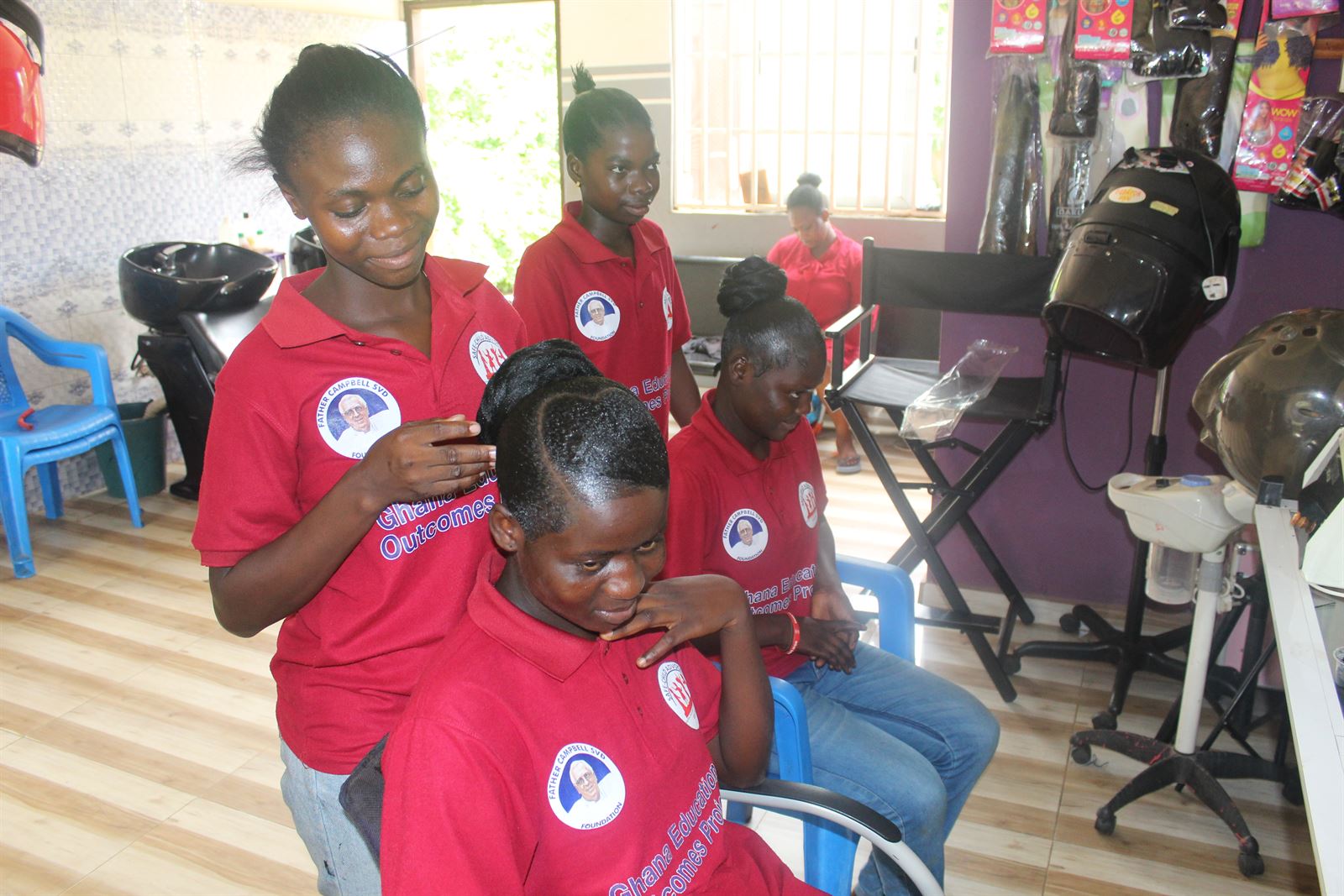
Hands-on salon training introduces learners to hair care and a range of styling services used in the beauty industry.
The programme helps prepare learners for employment in the beauty industry or for exploring a small salon business.
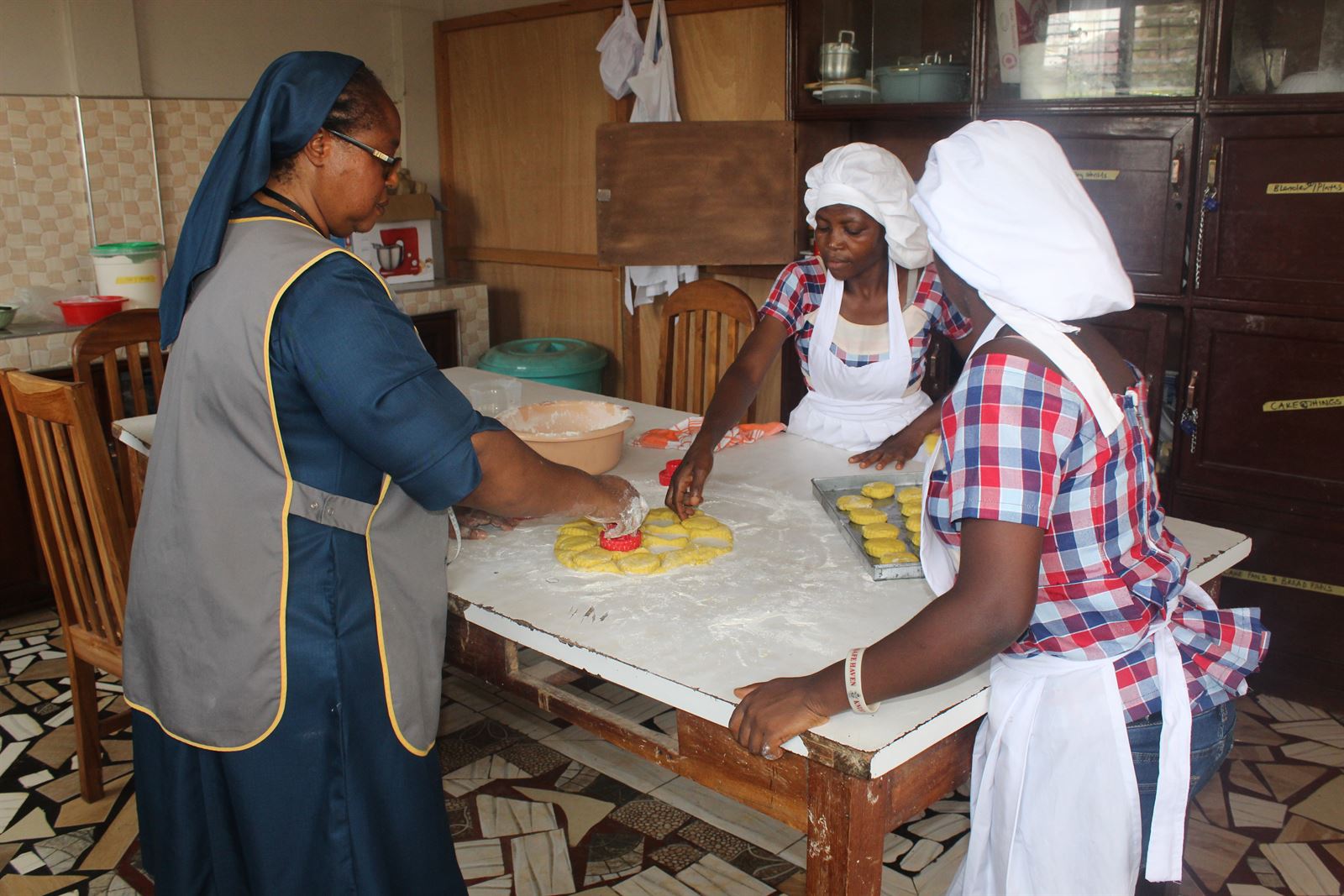
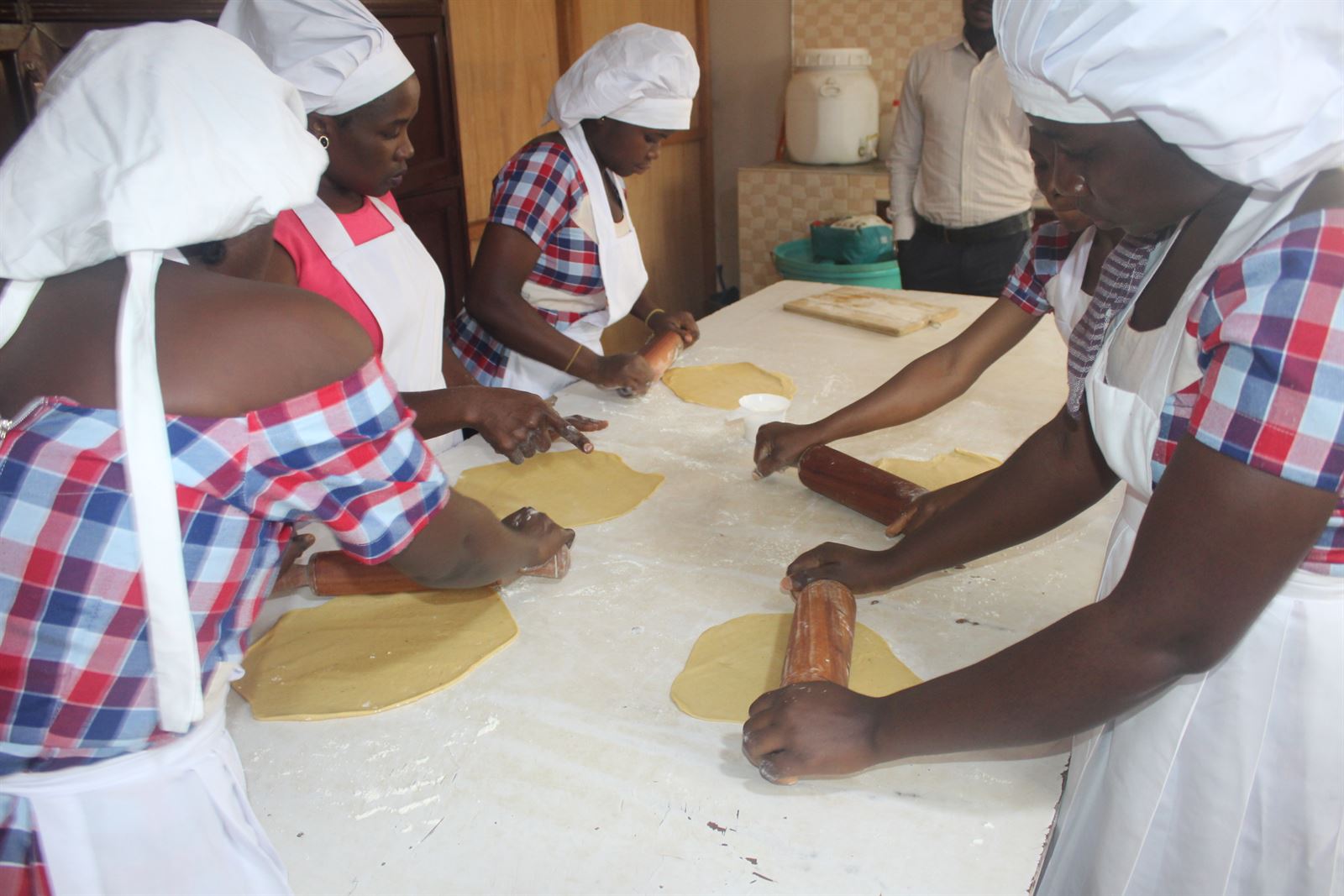
Trainees build practical food preparation skills and learn the hygiene and safety practices needed in catering and hospitality.
Literacy, numeracy and life skills help trainees use their vocational abilities with confidence and make informed plans for the future.
Reading, writing and basic calculations connected to everyday training: instructions, measurements, recipes, costs, prices and simple records.
Entrepreneurship, financial literacy and business basics help learners explore responsible employment and self-employment options.
Life skills, confidence, discipline and career guidance support the transition from training into working life.
Preparing for next steps
Beneficiaries are prepared to sit relevant National Vocational Training Institute (NVTI) examinations. Graduates also receive start-up support to help establish a sustainable livelihood.